A founder checks their LinkedIn analytics 30 days after launching a content push, sees a handful of leads, and decides the whole effort isn't worth the time. Six months later, three of those early leads close as customers worth more than the entire year's marketing budget.
That gap between what the data shows early and what actually happens later is the single biggest reason LinkedIn marketing ROI gets misjudged by founders. The channel works, but it works on a timeline most people aren't measuring correctly.
This article breaks down why LinkedIn marketing ROI looks worse than it is in the short term, the actual formula for measuring it correctly, and what founders should realistically expect to invest and get back.
Why LinkedIn Marketing ROI Is So Easy to Misjudge
The core problem is timing. The average time from a first LinkedIn touchpoint to closed revenue in B2B runs around 281 days, according to recent attribution benchmarks. A founder checking results after 30 days is looking at a fraction of a much longer story.
Standard 30-day return calculations typically show just 0.1 to 0.5 times spend back, a number that looks like failure on paper. That same investment often reaches 5 to 10 times return when measured over a full year, once deals that started months earlier actually close.
This mismatch explains why so many founders quit right before a campaign starts paying off. A lead form gets filled out in week one, but the deal doesn't become a qualified opportunity until month two, doesn't reach a real sales conversation until month four, and doesn't close until somewhere between month six and month twelve.
LinkedIn engagement trends support staying the course too. Average engagement by impressions climbed from 4.48% to 5.42% over a recent 12-month period, meaning the platform's overall attention economy is moving in a founder's favor, not against it, even while individual campaigns take time to mature.
What LinkedIn Marketing ROI Actually Measures
At its core, LinkedIn marketing ROI for B2B measures the revenue a company generates relative to what it spends on the platform, whether that spend is ad dollars, a founder's time, or both combined. It sounds simple, but most teams measure the wrong inputs.
Organic and paid activity both count toward this number, and they behave differently. LinkedIn's paid conversion rate averages 6.1%, well ahead of Google Search, with an overall return on ad spend around 121%. Organic activity, mainly founder and employee posting, doesn't show up in an ads dashboard at all, even though it often drives the trust that makes a paid touchpoint convert later.
Real ROI has to account for both channels working together, not just whichever one is easiest to pull a number for. A founder judging LinkedIn purely by ad spend numbers is only seeing part of the picture.
This is precisely why so many founders undercount LinkedIn's actual contribution. A prospect might see a founder's post three times before ever clicking a paid ad, and the ad platform takes full credit for a conversion that organic content actually made possible.
The Real Formula for Calculating LinkedIn Marketing ROI
Instead of a single 30-day snapshot, calculate ROI using a cohort-based approach that tracks a specific batch of leads all the way through to revenue, however long that takes.
Three numbers matter most. Pipeline-to-spend ratio divides total pipeline value generated by total LinkedIn spend, giving a multiplier. Cost per pipeline dollar divides spend by pipeline value, with a healthy target sitting around $0.10 to $0.20 per dollar of pipeline created. Cost per qualified lead divides spend by the number of sales-qualified leads that specific spend actually produced.
The measurement window matters just as much as the formula itself. Here's roughly what to expect at each stage:
| Time Since First Touch | Expected Return | What It Tells You |
|---|---|---|
| 30 days | 0.1x-0.5x | Too early, often misleading |
| 90 days | 0.5x-2x | Early quality Signal |
| 180 days | 2x-5x | Primarily health indicator |
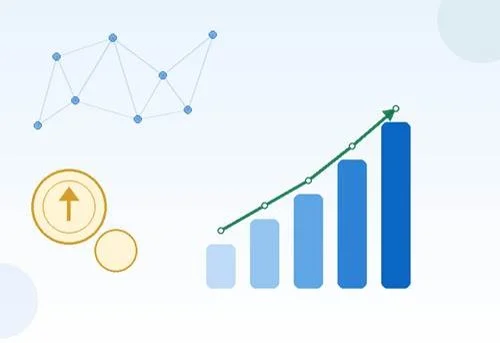
| 365 days | 5x-10x | True Program ROI |
Why does 30 days look so bad if the channel actually works? Because almost nothing has had time to close yet. Judging LinkedIn marketing ROI at the 30-day mark is like judging a garden one week after planting seeds.
What the Data Actually Shows for B2B
Beyond the timing problem, the underlying numbers make a strong case for LinkedIn specifically in B2B. Some 68% of B2B marketers increased their LinkedIn usage over the past year, and many now consider it the platform offering the best value among all social channels.
Thought leadership content, most often published by founders themselves, produces measurable pipeline effects. Roughly 60% of decision-makers say specific thought leadership prompted them to start actively buying from a company, and 86% said strong thought leadership would make them likely to invite that company into a competitive bid process.
Pricing power shows up too. About 23% of decision-makers report being willing to pay a premium after encountering quality thought leadership content, a detail that rarely appears in a standard ROI calculation but directly affects margin on every deal it touches.
More than half of B2B decision-makers now spend at least an hour a week actually consuming thought leadership content, which means the audience a founder is trying to reach is already primed to pay attention, provided the content itself is genuinely useful rather than promotional filler.
How Much Time and Money Should a Founder Actually Invest
Most small businesses spend under five hours a week on marketing overall, and LinkedIn shouldn't demand more than a modest slice of that. Three focused posts a week from a founder's personal profile, plus occasional comment engagement, typically outperforms a much larger time investment spread thin across multiple platforms.
On the paid side, organic-driven leads cost roughly $164 on average, compared to roughly $310 for a typical paid lead. That gap doesn't mean skip paid entirely, since paid still buys speed organic can't match, but it does mean a founder with limited time should lean toward organic first while budget is tight.
Is founder time itself a real ROI input? Yes, and it's the most commonly ignored one. A founder spending three hours a week writing posts is spending real, valuable time, and that cost belongs in the ROI equation even though no invoice ever gets generated for it.
A Quick Example: Tracking ROI the Right Way vs the Wrong Way
A SaaS founder launches a LinkedIn push in January, posting three times a week and running a modest $2,000-a-month ad campaign alongside it. By February, the dashboard shows a handful of leads and a return well under 1x on ad spend.
Frustrated, a founder tracking this the wrong way might cut the budget entirely at that point, reading the early numbers as proof the channel doesn't work for the business.
A founder tracking cohorts correctly instead tags every lead from that January launch and follows them for a full year. By December, six of those leads have closed as paying customers, several at premium pricing, producing a return well over 6x once the full sales cycle plays out. Same campaign, completely different conclusion, depending entirely on when and how it got measured.
The difference didn't come from spending more money or posting more often. It came entirely from measuring on a timeline that matched how the sales cycle actually unfolded, rather than one dictated by a monthly reporting habit.
Common Mistakes Founders Make When Judging LinkedIn ROI
A handful of measurement habits consistently lead founders to the wrong conclusion about whether LinkedIn is working.
Judging performance after 30 days: Given how long B2B sales cycles actually run, a 30-day snapshot almost always looks worse than reality, since most of the pipeline hasn't had time to mature yet.
Counting only paid spend, not founder time: Ignoring the hours a founder or team member spends creating content understates the real cost side of the ROI equation, making the number look artificially generous.
Ignoring thought leadership's effect on deal size: A deal that closes at a premium price because of strong content shows up as normal revenue in most systems, hiding LinkedIn's actual contribution to that specific outcome.
Comparing LinkedIn ROI to a single fixed benchmark: A healthy return looks completely different at 30, 90, 180, and 365 days, so comparing a 60-day number against a "should be 5x" expectation sets the channel up to fail unfairly.
Abandoning organic the moment paid numbers look weak: Since organic often builds the trust that makes paid convert, cutting both at once when only one channel looks weak can undercut the other channel's performance too.
How to Set Up Your Own LinkedIn ROI Tracking
Start by tagging every lead source clearly in your CRM the moment it arrives, distinguishing LinkedIn organic, LinkedIn paid, and every other channel individually rather than lumping everything into "social" or "inbound."
Set a recurring quarterly review specifically at the 90, 180, and 365-day marks for each cohort of leads, rather than checking constantly and reacting to noisy short-term numbers. Assign someone, even the founder personally, to actually run this review on schedule.
Track founder and team time spent on LinkedIn activity honestly, even as a rough weekly estimate, and include it in your cost side of the calculation. A number that ignores labor cost isn't measuring real ROI, just ad spend efficiency.
Build a simple shared tracker, even a basic spreadsheet, listing each cohort's launch date, spend, and lead count, then revisit it on the same 90/180/365-day schedule every time. Consistency in how you measure matters more than the sophistication of the tool you use to do it.
Conclusion
LinkedIn marketing ROI for B2B rewards patience more than almost any other channel a founder is likely to invest in. The numbers that look discouraging after a month often look excellent after a year, once the full sales cycle has had time to play out.
Measure in cohorts, track founder time honestly, and expect the real payoff to show up on a 180-to-365-day timeline rather than a 30-day one. Founders who understand this timing rarely walk away from LinkedIn too early, and that patience is usually what makes the channel pay off.
None of this requires a sophisticated marketing operation either. A founder with a spreadsheet, a consistent posting habit, and the discipline to wait for the right measurement window can track LinkedIn marketing ROI just as accurately as a much larger team with expensive attribution software.

Frequently Asked Questions
1. Why does LinkedIn marketing ROI look bad in the first month?
Because the average time from a first LinkedIn touchpoint to closed B2B revenue runs around 281 days, so a 30-day snapshot only captures the very beginning of a much longer sales cycle.
2. What's a realistic timeline to judge whether LinkedIn marketing is working?
The 180-day mark is generally the most reliable early health indicator, while the 365-day mark reflects the program's true return once most deals in that cohort have had time to close.
3. Should founder time count as a cost when calculating LinkedIn marketing ROI?
Yes. Hours spent writing and engaging with content are a real cost even without an invoice attached, and leaving that time out of the calculation overstates the channel's actual efficiency.
4. Is organic or paid LinkedIn activity better for B2B founders with limited budgets?
Organic tends to cost less per lead, roughly $164 versus $310 for paid, making it the better starting point for founders with limited time and budget, though paid still offers faster, more controllable results.
5. Does thought leadership content really affect deal size, not just lead volume?
Yes. About 23% of decision-makers say they're willing to pay a premium after encountering strong thought leadership content, an effect that standard lead-volume metrics don't capture at all.
6. How should a founder track LinkedIn leads to measure ROI accurately?
Tag every lead's source clearly in the CRM at the moment it arrives, and follow each cohort of leads through to actual closed revenue rather than judging performance at a single fixed point in time.
7. What's the biggest mistake founders make when evaluating LinkedIn marketing ROI?
Judging results too early, typically at the 30-day mark, when most B2B deals influenced by that activity haven't had nearly enough time to reach a closed sale yet.
8. How much time should a founder realistically spend on LinkedIn each week?
Three focused posts a week, plus some engagement in comments, fits within the under-five-hours-a-week most small businesses allocate to marketing overall, without demanding a disproportionate share of it.